
AI Model Risk Management for models that keep evolving
AI and machine learning models move fast. Regulators expect oversight that keeps up.
Yields brings the same rigour you apply to traditional models, validation, monitoring, documentation, governance, to AI. That's what AI Model Risk Management means at Yields: your models stay explainable, your teams stay in control, and you stay ready when the regulator asks.
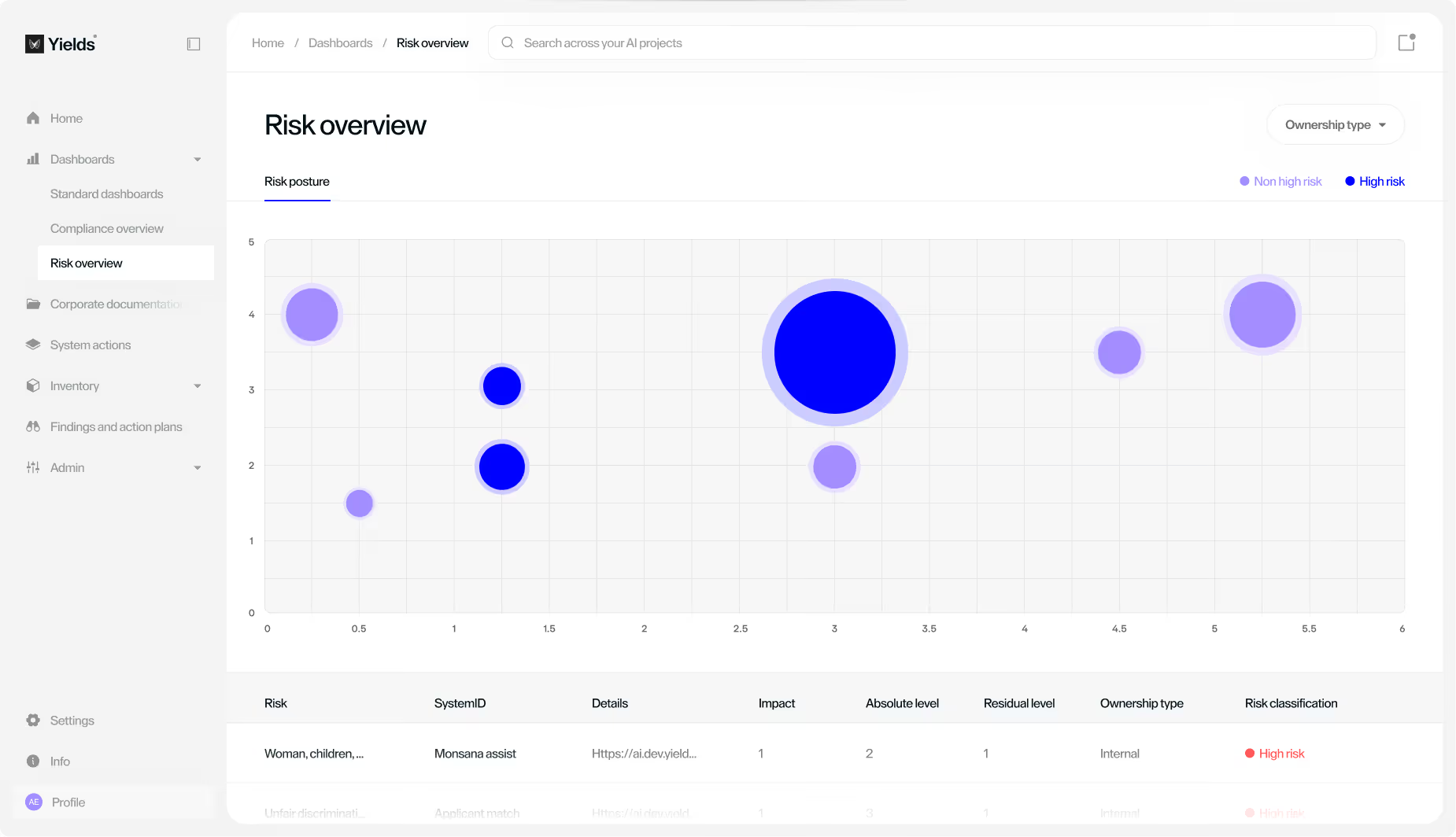
Why AI model risk management is different
AI and machine learning models introduce challenges that traditional model risk processes were not designed for:


Without structure, AI model risk increases and oversight becomes harder. Yields applies proven model risk management principles to AI models, so governance stays stable even as methods change.
AI and machine learning models Yields supports
Yields applies one consistent model risk management framework across all model types, traditional, machine learning, and AI, regardless of industry or methodology.
Machine learning models
AI-driven use cases
Advanced & generative AI

Regulatory pressure is real

EU AI Act
High-risk AI use cases in financial services, credit scoring, fraud detection, insurance pricing, get their obligations from December 2027. The classification work doesn't wait for the deadline.
NIST AI RMF
A practical, jurisdiction-agnostic framework for governing AI risk, govern, map, measure, manage.
US supervisors
SR 26-2 reaffirms model governance and validation, and explicitly carves out generative and agentic AI. Translation: these systems need their own governance track.
National regulators
From the ECB to the FCA, all ask the same thing: can you explain it, who approved it, when was it tested, can you prove it?

A structured process for AI model risk

Model design and development
Centralized inventory, classification and risk tiers, including AI-specific attributes.

(pre)-Validation
Structured validation workflows, testing of training data, and documented results.

Governance & attestation
Independent reviews, approvals, and regulatory attestation.

Monitoring
Continuous performance monitoring and drift detection after deployment.

Change & version management
Controlled model changes, versioning, and a full audit trail across retraining cycles.
Where model risk management meets AI governance
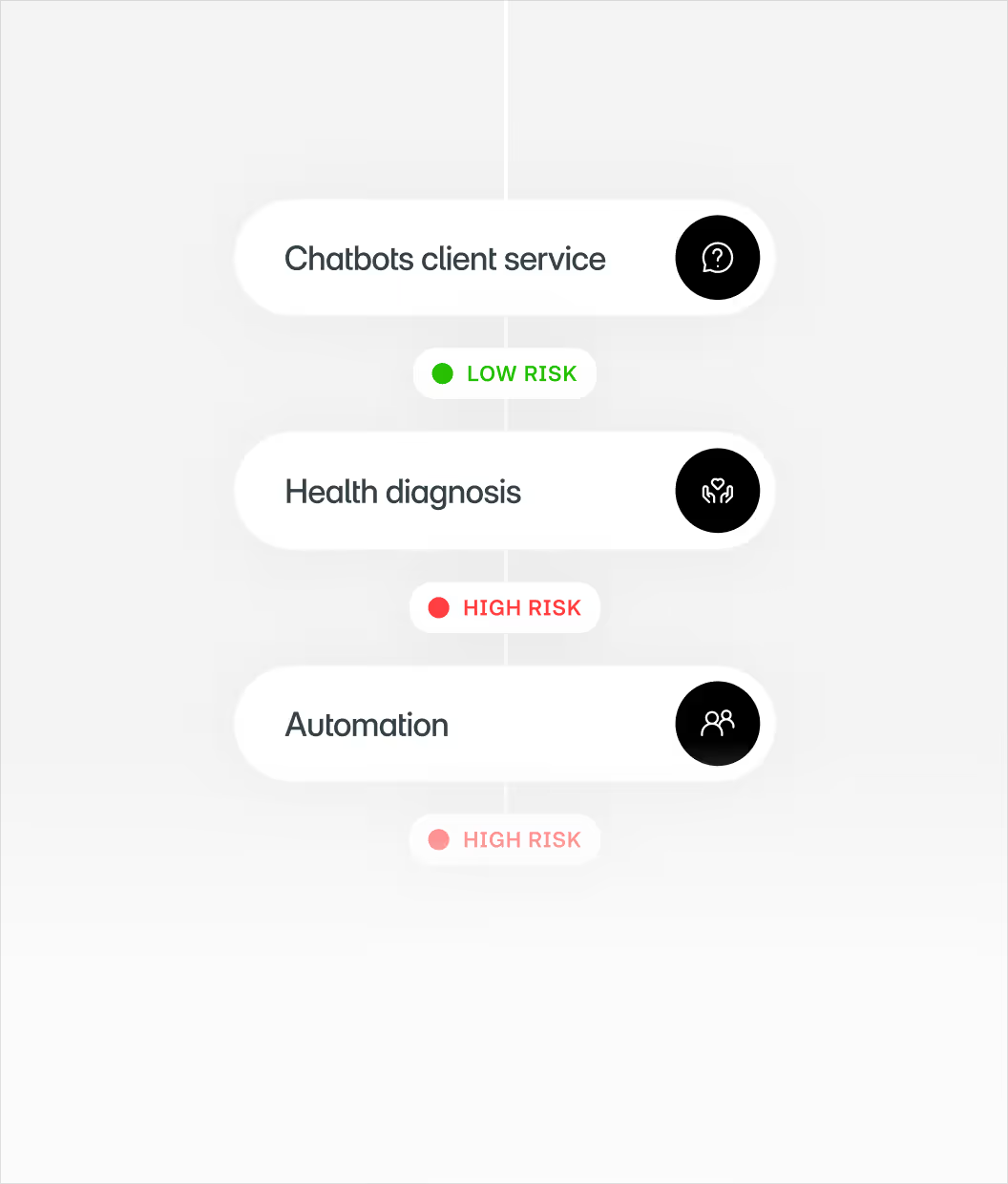
AI use cases often rely on underlying models. Yields connects model risk management with AI governance in a simple way. Validators review the model, while governance teams assess the broader use case and its controls. Both teams work with the same information, which avoids duplication and improves clarity.
Proven results with Yields
Strong AI model risk management leads to better decisions, fewer surprises, and smoother supervisory interactions. Organisations using Yields gain clearer oversight, faster validation cycles, and more reliable documentation across their entire model landscape, including AI.
Reduced validation time
Reduced documentation time
Trusted by leading financial institutions and corporates




Strengthen your AI Model Risk Management with Yields
Discover how our platform brings structure, transparency and confidence to your model landscape.
FAQ

AI model risk management applies the principles of model risk management, governance, validation, monitoring, and control, to AI and machine learning models. It ensures these models are documented, tested, and monitored so they remain accurate, fair, and aligned with policy and regulatory expectations.
The framework is the same, but AI models introduce additional considerations. They are often less transparent, rely on high-dimensional data, and are retrained more frequently. AI model risk management adds structured validation of training data, monitoring for drift, and controls tailored to these characteristics.
Yields provides structured validation workflows covering performance testing, sensitivity analysis, benchmarking, documentation review, and independent review, adapted for the complexity of AI and machine learning models.
Yields continuously tracks model performance, stability, and data quality after deployment, making it possible to detect drift and performance degradation before they affect outcomes.
Model risk management focuses on the individual model, while AI governance addresses the broader use case, its controls, and its regulatory context. Yields connects both so validators and governance teams work from the same information, avoiding duplication and improving clarity.


