
AI Inventory for structured AI governance and regulatory oversight
As organizations increasingly adopt AI systems, models and agents, maintaining oversight of the AI landscape becomes critical. Without a structured inventory, AI initiatives quickly become fragmented across teams, vendors and tools.
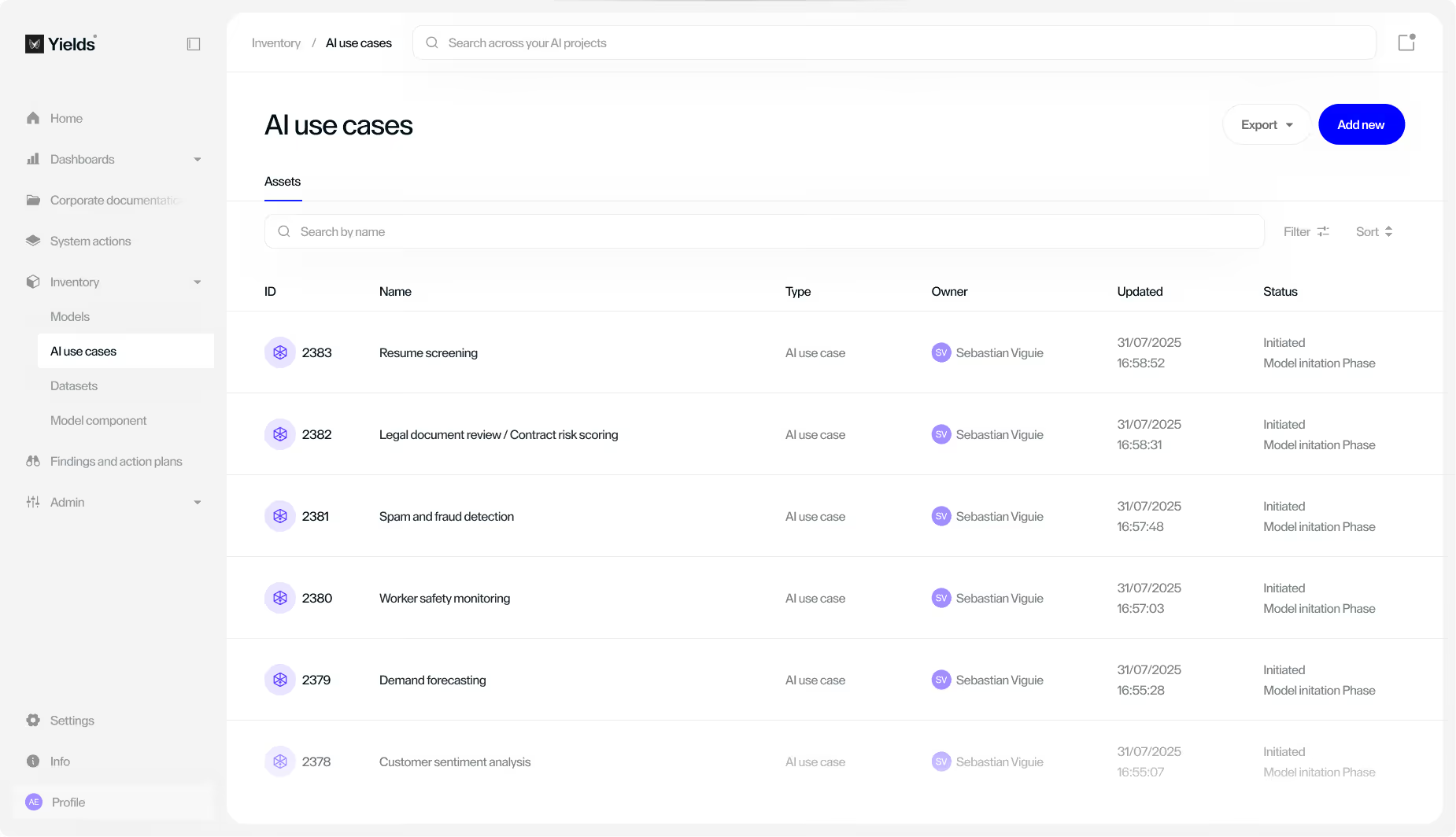
Yields AI Governance Software provides a centralized AI Inventory that allows organizations to register, classify and manage AI systems, use cases and vendors in one structured catalogue. The platform captures key metadata, lifecycle information and governance attributes to support internal oversight and regulatory compliance.
Why an AI inventory is essential
Without a centralized AI inventory, organizations struggle to maintain visibility over their AI systems and use cases. AI initiatives are often developed across multiple teams and technologies, making it difficult to maintain consistent oversight.


As AI adoption accelerates and regulatory expectations evolve, fragmented oversight creates governance gaps, operational risk and compliance exposure.
A centralized AI catalogue with Yields
Yields AI Governance Software provides a structured AI catalogue that centralizes information about AI systems and their governance attributes.
The AI inventory enables organizations to capture and organize:

AI systems, models and agents
AI use cases and their business purpose
Vendors and third-party AI providers
Vendors and third-party AI providers
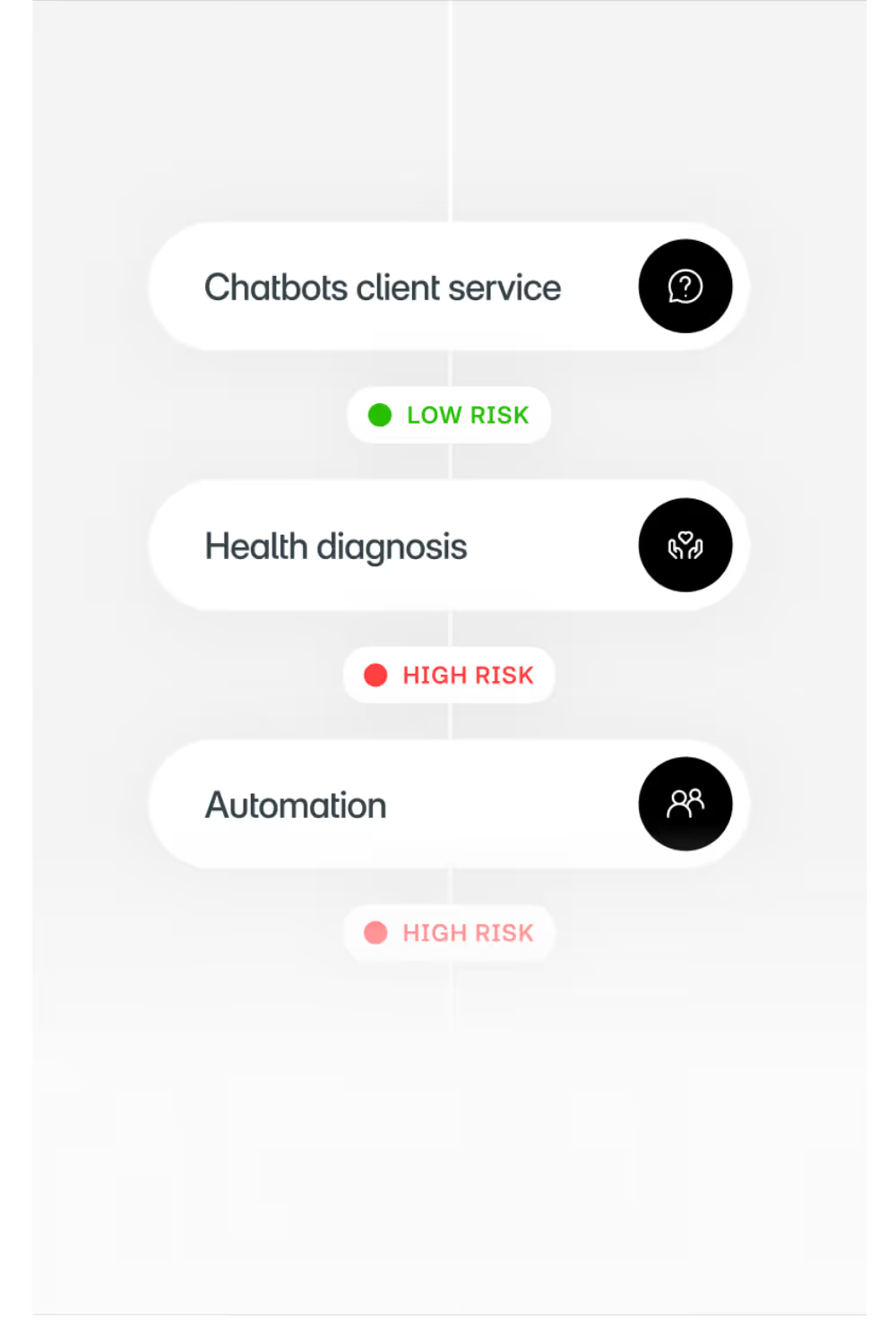
Regulatory exposure, such as EU AI Act risk categories
AI system lifecycle stage and lifecycle records,...
How it works?

Register AI systems and use cases
Capture details on AI systems, models, agents, associated use cases, vendors, data sources, and deployment context.

Capture structured metadata and classifications
Include key attributes (risk, regulatory exposure, governance metadata like assumptions/limitations). Centralized metadata facilitates reuse.

Maintain lifecycle visibility
Track AI systems across their lifecycle, including development, deployment, monitoring and updates.


Managing AI risk in practice
Download our practical guide to AI governance and managing AI Risk, built on a decade of real-world experience. Discover how to operationalize AI governance with clarity, structure, and confidence.















Build a complete inventory of your AI systems.

FAQ

An AI Inventory is a centralized, structured catalogue that allows organizations to register, classify, and manage all their AI systems, models, agents, along with associated use cases and vendors. It is designed to provide a complete overview of an organization's AI landscape, including key metadata, lifecycle information, and governance attributes.
Without a centralized AI Inventory, organizations lack visibility and consistent oversight of their AI initiatives, which are often fragmented across different teams and technologies. This typically results in:
- AI systems tracked in spreadsheets or disconnected tools.
- Limited insight into AI use cases and their business purpose.
- Incomplete documentation of data sources, including personal or sensitive data.
- Difficulty identifying regulatory exposure.
Fragmented oversight creates governance gaps, operational risk, and compliance exposure.
The structured AI Catalogue in Yields AI Governance Software enables organizations to capture and organize information including, but not limited to:
- AI systems, models, and agents.
- AI use cases and their business purpose.
- Vendors and third-party AI providers.
- Data sources used by the AI systems.
- Business criticality of AI systems.
- Regulatory exposure, such as EU AI Act risk categories.
- Deployment context (internal, external-facing, or embedded AI).
- AI system lifecycle stage and lifecycle records.
The AI Inventory is the foundation for scalable AI Governance. By centralizing the registration, classification, and metadata of AI systems in one platform, organizations gain full visibility into their AI landscape and can maintain consistent governance across all use cases and models. This provides a structured approach to effective AI risk management and oversight.
The AI Inventory supports the identification of regulatory exposure, such as the risk categories under frameworks like the EU AI Act. The structured classification of AI systems ensures alignment with these types of regulatory frameworks. This helps organizations to proactively manage their compliance position and capture the necessary governance attributes.