
The AI Act Delay Delusion: Why AI Governance is Still a 2026 Priority

There is a dangerous whisper going around boardroom tables: the idea that because the EU has shifted key deadlines, AI governance can be put on the back burner. While it is true that the European Union has agreed to postpone several application dates to allow more time for technical standardization, treating this as a stay of execution is a strategic mistake.
The high-risk obligations might have moved, but the era of unregulated AI is already over. Organizations that mistake a phase-in for a day off will find themselves facing massive technical and regulatory debt by the time the new deadlines arrive.
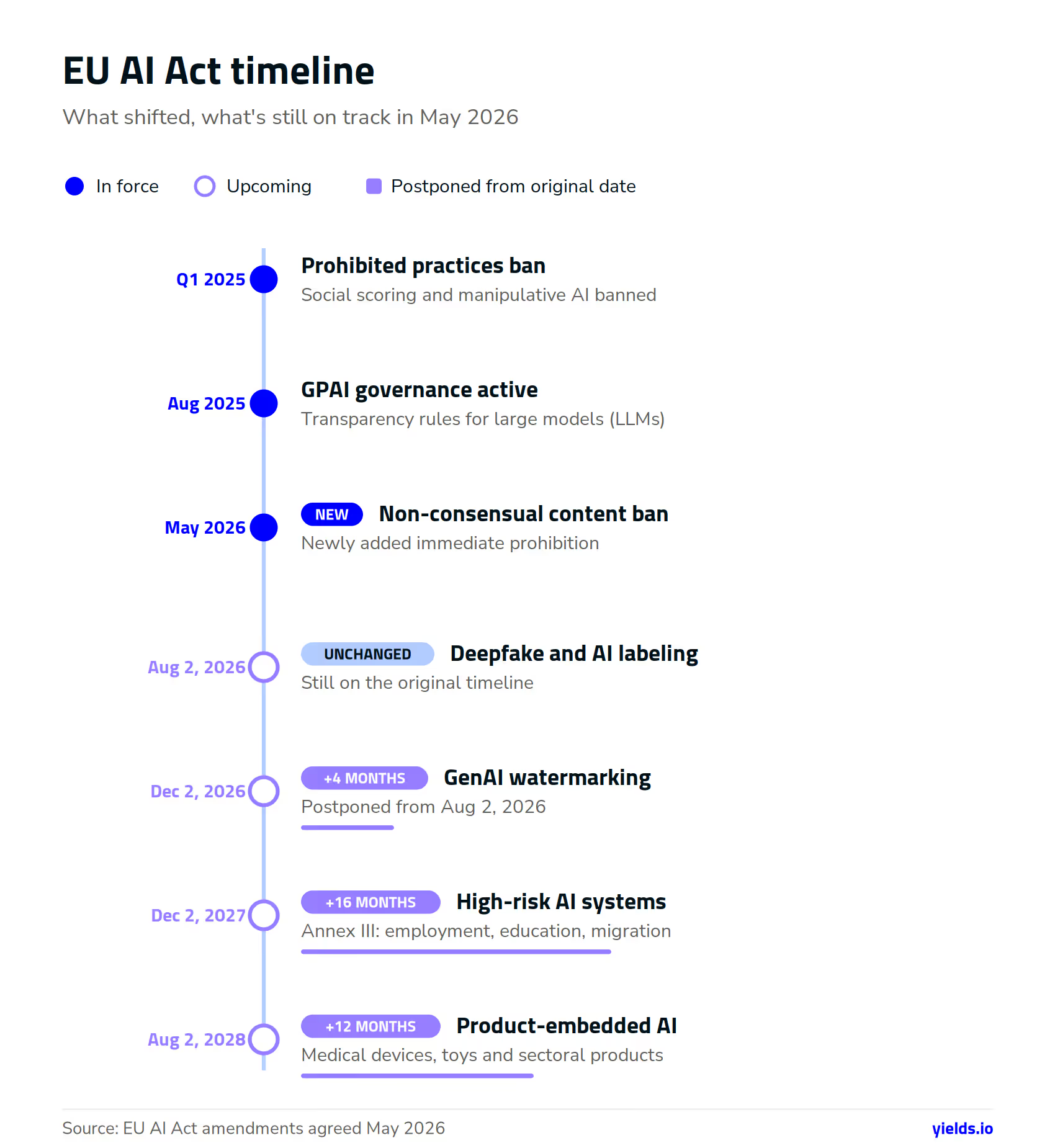
The New Timeline: What actually moved?
In May 2026, the EU reached an agreement to adjust the roadmap for the AI Act. The primary goal was to give industries more breathing room to implement complex standards.
- High-Risk AI Systems (Annex III): Deadlines for systems used in sensitive areas like employment, education, and migration have been pushed from August 2, 2026, to December 2, 2027.
- Product-Embedded AI: Systems already covered by sectoral safety laws, such as medical devices or toys, now have until August 2, 2028, to comply.
- Generative AI Watermarking: The specific obligation to watermark AI-generated content has been granted a four-month grace period, with a new compliance date of December 2, 2026.
What remains in force right now
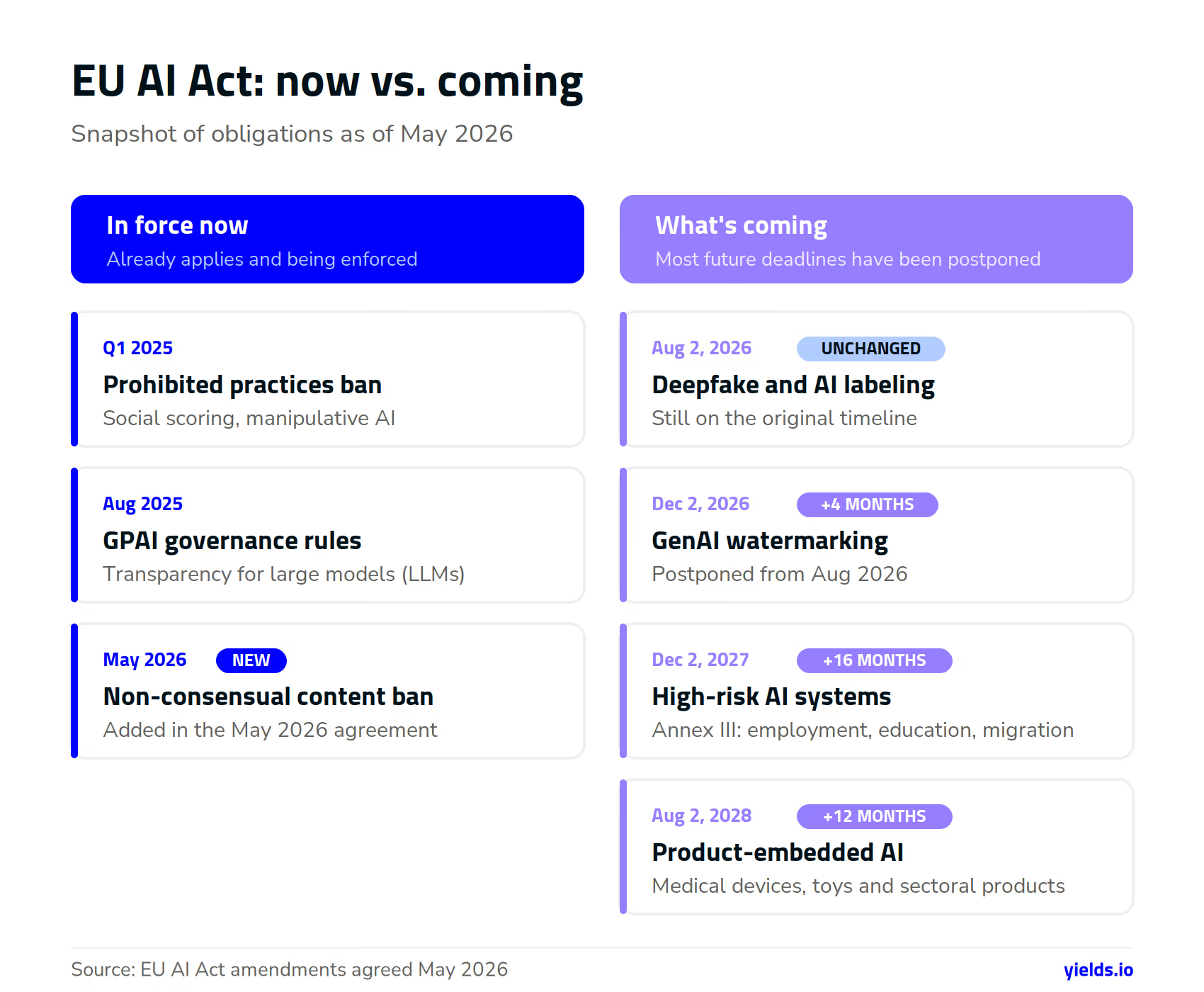
It is a common misconception that nothing applies yet. Several critical pillars of the AI Act are already active and being enforced by the AI Office.
- Prohibited Practices: The ban on unacceptable risks, such as social scoring and manipulative AI, has been in effect since early 2025.
- New Prohibitions: The May 2026 agreement added immediate bans on AI used to generate non-consensual sexual content.
- General-Purpose AI (GPAI): Rules for governance and transparency of large models (like LLMs) have been active since August 2025.
- Labeling and Disclosure: General transparency requirements for deepfakes and AI-generated content still largely align with the original August 2, 2026, timeline.
Why governance is more relevant today than ever
The 16-month postponement for high-risk systems is a gift of time to build a robust framework, not a reason to stop. In a market where trust is the primary currency, AI governance serves a purpose far beyond legal compliance.
Avoiding the Governance Gap If your organization continues to deploy AI without a governance framework during this "delay," you are building on sand. By the time 2027 rolls around, you will have dozens of legacy models that were never properly documented, validated, or checked for bias.
Algorithmic Risk as Business Risk As we have seen in recent market fluctuations, AI models are prone to drift and performance degradation. Strong governance is the mechanism that ensures your AI remains a corporate asset rather than a liability. It provides the oversight needed to detect hallucinations and bias before they impact your customers or your reputation.
The Bottom Line
The decision to shift these deadlines was a move toward practical implementation, not a sign of regulatory retreat. The EU is giving companies the time to get the "standardization" right.
Leading firms are using 2026 to embed AI governance into their core corporate risk management workflows. They understand that by the time the 2027 and 2028 deadlines arrive, compliance should be a natural outcome of their existing processes, not a frantic rescue mission. Now is the time to build the foundation, while the clock is still in your favor.
About the
Author(s)

Sébastien Viguié is the co-founder of Yields, the first FinTech platform leveraging AI for enterprise-scale model testing and validation. A strong advocate of model risk governance and strategy, he focuses on helping financial institutions embed trust, transparency, and compliance into their AI and model lifecycle. Previously CISO at Yields, Sébastien gained hands-on experience reconciling cybersecurity principles with model risk management and AI governance, a perspective he now extends to emerging regulatory frameworks such as ISO, NIST, and the EU AI Act. Before founding Yields, he worked as a front-office quantitative analyst at BNP Paribas, where he developed a deep understanding of model development and validation in fast-paced trading environments, expertise that continues to inform his pragmatic approach to responsible AI and risk management today.
Related Articles
The Three Lines Of Defence In Model Risk Management

Five Model Risk Management Trends Defining 2026
How to validate AI - with Agus Sudjianto